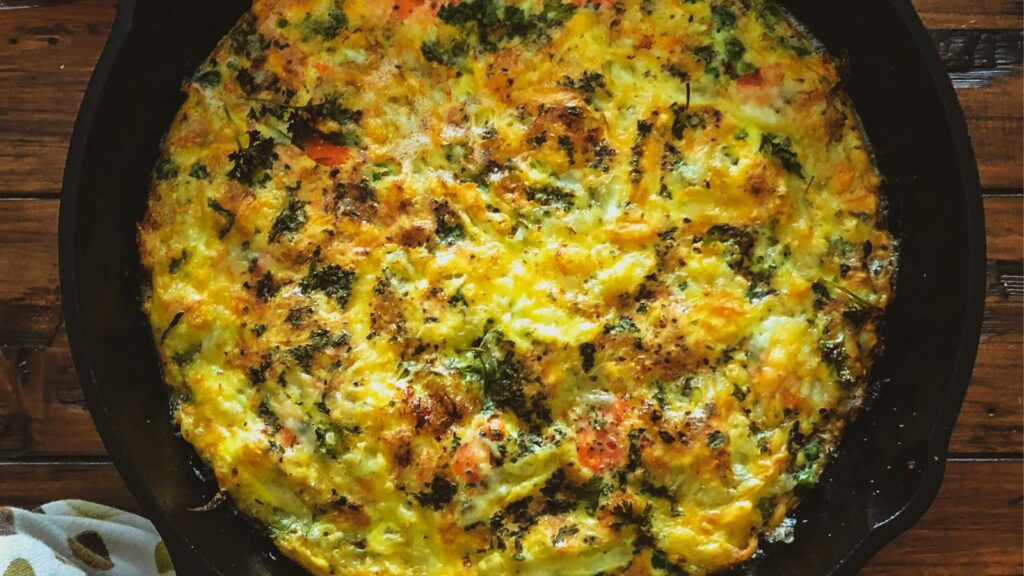
It is frustrating having to choose between something nutritious and something that actually tastes good. A frittata removes that trade-off. You can make it in a single skillet in about 30 minutes from start to finish, including time in the oven.
A frittata is an Italian egg dish, closer to a crustless quiche than a classic folded omelette. Its main advantage is how little effort it demands. After a brief start on the stovetop, the eggs finish cooking in the oven, so there is no flipping or constant attention. The result is a thick, evenly set dish with a lightly golden top that slices neatly and holds together well.
It is also one of the most flexible options for a busy week. You can prepare it ahead of time and store it in the fridge for several days. Serve it warm for dinner, at room temperature for lunch, or as a quick breakfast. It works across meals and holds up well over time.
Why You’ll Love It
One Skillet, Thirty Minutes, No Compromise
Broccoli and sausage make a balanced, often overlooked pairing. The broccoli adds color, texture, and a mild bitterness that cuts through the richness, while the sausage brings fat, seasoning, and depth. Garlic bridges the two, and the eggs hold everything together into a cohesive, satisfying dish.
Feta adds a final layer of contrast. Sprinkled over just before serving, it contributes a salty, tangy bite and a light creaminess that offsets the richness of the eggs and sausage. Its assertive flavor means a small amount goes a long way.
The method is straightforward. Briefly cook the broccoli until just tender so it keeps its structure and color. Brown the sausage to develop flavor, then add the garlic. Pour in the eggs and transfer the skillet to the oven. In about 12 to 15 minutes, the eggs set and the frittata is ready to serve.


An Ingredient Worth Choosing Carefully
Picking the Right Sausage
Look for sausage with the fewest ingredients on the label; it is the most reliable indicator of quality. Chicken or turkey sausage is often a good choice. They are leaner than pork and have a cleaner flavor that does not overwhelm the eggs and broccoli.
Check the sodium content and choose the lower option where possible. Ideally, look for nitrate-free, uncured sausage with no corn syrup or artificial preservatives. Most good supermarkets stock at least one option that meets these criteria, and the difference in flavor is noticeable.
The most important thing is that the sausage gets properly browned/cooked in the pan before the eggs go in, as caramelization is where the flavor comes from.